
Parsley Root
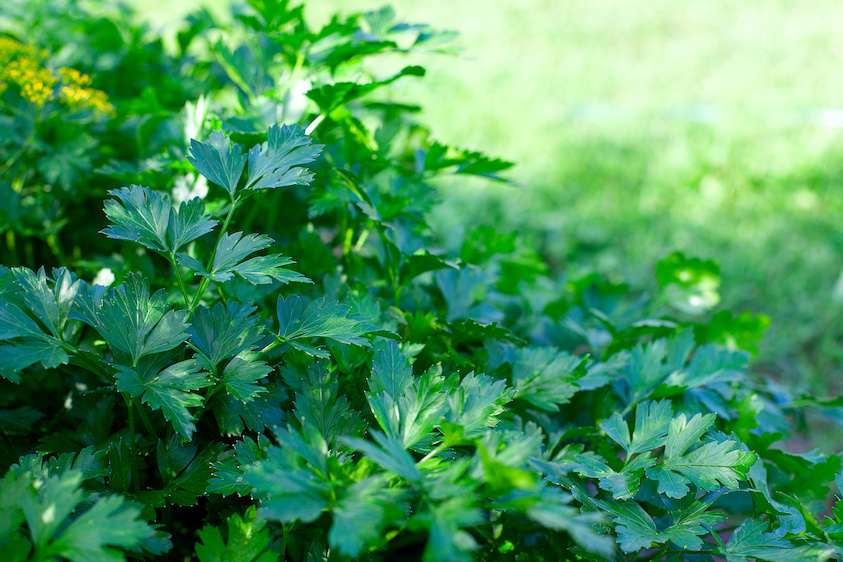
Parsley is documented in many old herbals and was revered for its medicinal uses as well as for sacred and superstitious reasons. Master herbalist Dioscorides, who published De Materia Medica in 70AD, named parsley ‘rock celery’ because the undomesticated plant grew amongst rocks. The genus name comes from the Greek petros, meaning rock, and selinon, meaning celery. It has a long history of use in cooking as well as being popular as a digestive tonic, diuretic and general healing plant.
Parsley root has a particular affinity for the urinary tract. Like its close relative celery seed it is said to increase the elimination of uric and other acid metabolites and so it has a particular application for gouty, arthritic conditions. In his book, The Essential Book of Herbal Medicine, Simon Mills says: “…the root of the plant was seen as one of the best cleansers of the ‘liver, spleene and belly’, used for jaundice and general epigastric disorders.”
In the 1930s it was mentioned in the classic book A Modern Herbal, the first comprehensive encyclopaedia of herbs to appear since the days of Culpeper (1600s). The author Maude Grieve said a strong decoction of the root is of great service in gravel, stone, congestion of the kidneys, dropsy (oedema) and jaundice. She said a fluid extract of the root acts more readily on the kidneys than that from other parts of the herb. Culpepper himself said “Galen commended it against falling sickness, and to provoke urine mightily; especially if the roots be boiled, and eaten like parsnips.” Parsley was also considered a useful galactagogue stimulating both the amount and flow of breastmilk.
References
Quave, C.L. Quave Research Group Website. Version 11.0, April 2015. Petroselinum crispum (Mill.), Apiaceae Ellen Chiang [Internet]; 2015 [accessed Aug 26 2022]. Available from etnobotanica.us/wp-content/uploads/2011/12/Plant-Monograph-Book-4.2013.pdf
Mills S. The Essential Book of Herbal Medicine. Penguin:London. 1991. p.473
Grieve M. A Modern Herbal. Penguin:London; 1980. p. 611-14
News Image
News Category
News Summary
Dive into how Parsley supports urinary health, aids in detoxification, and promotes digestive balance, with potential benefits for gout, jaundice, and fluid retention through its diuretic and cleansing properties.
36901
Top Product Attributes
-
Common Name
Holy Basil
-
Botanical Name
Ocimum tenuiflorum
-
Part Used
Leaf
-
Clinical Summary
-
Monograph
-
Alcohol
60% alcohol
-
Dose
20 to 50mL weekly
Holy basil is considered unique amongst medicinal herbs for its wide variety of actions and ability to treat and prevent a range of diverse conditions.
Main Product Attributes
A guide to Holy Basil and its properties
-
Traditional Use
The emerging science on holy basil, which reinforces ancient Ayurvedic wisdom, suggests that it is a tonic for the body, mind and spirit that offers solutions to many modern-day health problems.
-
Actions
Adaptogen, relaxing nervine, antidepressant, anxiolytic, neuroprotective, antioxidant, immune modulator, analgesic, chemopreventive, anticancer, anti-inflammatory, antimicrobial, expectorant, cardioprotective, hypolipidaemic, hepatoprotective, aromatic digestive
-
Indications
• Fatigue, stress and related conditions, mood disorders (anxiety and mild depression), generalized anxiety disorder (GAD), poor memory and cognition, Alzheimer’s disease
• Cardiovascular disease, high blood pressure, stroke
• Viral infections, fungal infections, skin infections, respiratory tract infections such as colds and influenza, herpes simplex virus (HSV), acne, allergic rhinitis, asthma, tooth decay, gingivitis
• High blood sugar, type 2 diabetes, metabolic syndrome, insulin resistance
• Peptic ulcers, indigestion
• Pain, headache, arthritis
• Hepatic disease, fatty liver disease
• Cancer prevention, adjunct to radiotherapy, heavy metal toxicity
• Issues and physical demands faced by modern air travellers such as infection, fatigue, thrombosis, dealing with anxiety, low oxygen in the body tissues (hypoxia), radiation, industrial chemicals and poor sleep. -
Energetics
Warming, drying, pungent, sweet
-
Use in Pregnancy
High doses of holy basil are best avoided in pregnancy. It has been used traditionally throughout pregnancy however there is preclinical evidence to suggest that high doses may have antifertility and abortifacient effects. Further research in humans is necessary to confirm this as experimental evidence cannot be extrapolated to human use.
-
Contraindications & Cautions
Holy basil has been used for countless generations, in different cultures and systems of medicine, without any specific safety concerns. Patients should discontinue holy basil at least two weeks before elective surgical procedures due to potential antiplatelet and hypotensive effects, which might cause excessive bleeding and interfere with blood pressure control if used perioperatively.
-
Drug Interactions
While these interactions have not been reported, and they may not be clinically significant, monitor with anticoagulant/antiplatelet drugs due to theoretical additive effects, phenobarbital due to theoretical risk of increased sedation and hypoglycaemic medications due to holy basil’s anti-diabetic action.
-
Dietary Information
Vegan friendly. Gluten and dairy free.
-
Substitutes
Withania, Korean Ginseng, Reishi, Liquorice, Rhodiola, Siberian Ginseng, Gotu Kola
Add new comment