Korean Ginseng

Submitted by admin on Mon, 11/04/2024 - 16:38

Korean ginseng’s genus name, Panax, is derived from the Latin panacea meaning “cure all”. Traditional Chinese medicine textbooks describe near-mythical qualities for the human shaped root (the word ginseng is derived from the Chinese word for person) such as restoring balance to one’s life force and increasing longevity. In the East, where it is considered to be the most important of all medicinal herbs, wild mountain ginseng was a revered plant (it is now almost extinct), a treasure beyond price, surrounded by many stories of magical lore. While todays mostly cultivated Korean ginseng is not a miracle herb it is clearly an important remedy with an ancient history of improving health. Herbalists classify Korean ginseng as an adaptogen indicating a wide range of therapeutic uses.

Korean ginseng has shown some potential to help calm symptoms of attention deficit hyperactivity disorder (ADHD). In a study involving 18 children, aged between six and 14 years old who were diagnosed with ADHD, researchers reported improvements in anxiety, personality and social functioning. The children were given 1000mg of Korean ginseng for eight weeks. The effects of Korean ginseng compared to a placebo were evaluated on 70 ADHD patients aged between six and 15 years old. In the intervention group, 33 patients were given 40mL of Korean ginseng twice per day. After eight weeks a decrease in inattention and hyperactivity scores was recorded in the treatment group compared with the control group.

In another study, 40 children with ADHD, aged between six and 12, were given daily supplements containing omega-3 and Korean ginseng. Results of the study suggest that the combination of the two ingredients may help improve memory and attention in children with ADHD

References

i Zhang H, Abid S, Ahn JC, Mathiyalagan R, Kim YJ, Yang DC, Wang Y. Characteristics

of Panax ginseng Cultivars in Korea and China. Molecules. 2020 Jun 5;25(11):2635.

doi: 10.3390/molecules25112635. PMID: 32517049; PMCID: PMC7321059.

ii Hoffmann D. Medical Herbalism. Rochester: Healing Arts Press. 2003. p. 570

iii Lee SH, Park WS, Lim MH. Clinical effects of korean red ginseng on attention

deficit hyperactivity disorder in children: an observational study. J Ginseng Res.

2011 Jun;35(2):226-34. doi: 10.5142/jgr.2011.35.2.226. PMID: 23717065; PMCID:

PMC3659525.

iv Lee J, Lee A, Kim JH, Shin YM, Kim SJ, Cho WD, Lee SI. Effect of Omega-3 and

Korean Red Ginseng on Children with Attention Deficit Hyperactivity Disorder: An

Open-Label Pilot Study. Clin Psychopharmacol Neurosci. 2020 Feb 29;18(1):75-80.

doi: 10.9758/cpn.2020.18.1.75. PMID: 31958908; PMCID: PMC7006981.

v Ko HJ, Kim I, Kim JB, Moon Y, Whang MC, Lee KM, Jung SP. Effects of Korean red

ginseng extract on behavior in children with symptoms of inattention and

hyperactivity/impulsivity: a double-blind randomized placebo-controlled trial. J Child Adolesc Psychopharmacol. 2014 Nov;24(9):501-8. doi: 10.1089/cap.2014.0013. Epub 2014 Nov 4. PMID: 25369174

News Image
News Category
News Summary
Explore Korean ginseng—an age-old remedy revered in Eastern medicine for its balancing and restorative powers. Recent studies suggest this adaptogenic herb may offer support for children with ADHD.

Add new comment

Saffron

Submitted by admin on Mon, 10/28/2024 - 17:59

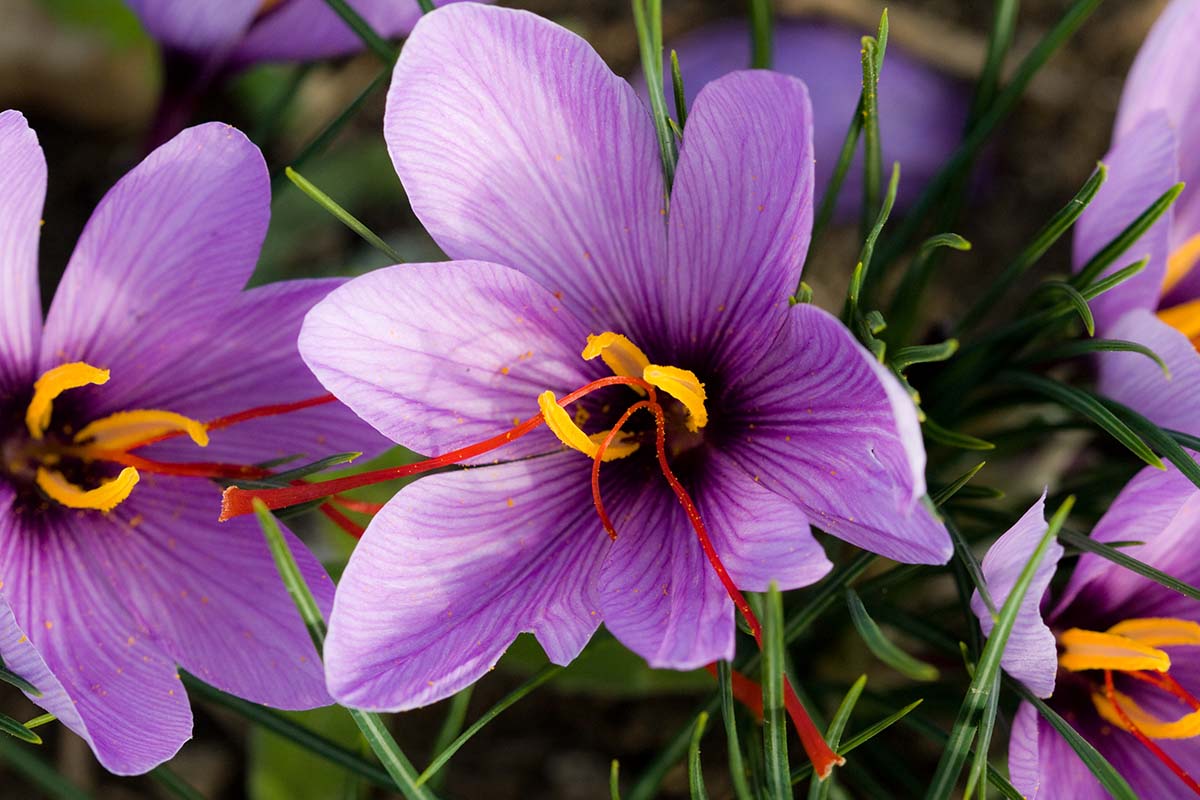
The vivid crimson stigmas and styles produced by the delicate mauve flowers of the saffron plant have the distinction of being the most expensive food on the planet. The reason is the laborious and labour-intensive method needed to harvest them. Throughout history saffron has been valued for not only infusing dishes in which it is used with a golden glow but also for its medicinal properties. 

A growing body of research suggests that saffron may reduce some of the symptoms, and help improve focus, in people with Attention Deficit Hyperactivity Disorder (ADHD). In 2019, a landmark pilot study brought saffron versus methylphenidate (Ritalin) to the attention of the ADHD community. Researchers found that 20 to 30mg of saffron a day for a period of six weeks was comparable to treatment with methylphenidate for symptoms of both inattention and hyperactivity. 

Since that time, more research has emerged supporting the benefits of saffron for ADHD. A 2022 study found saffron was more effective than methylphenidate for reducing ADHD symptoms of hyperactivity, though methylphenidate was more effective for inattention symptoms. Both therapies improved the number of hours slept among participants, which is a common challenge in ADHD, but only saffron helped with falling asleep. When saffron and methylphenidate were used together in a 2021 clinical trial, the combination was found to be more effective than the use of methylphenidate alone. These findings were supported by a 2022 clinical trial, which also found that saffron and methylphenidate were a superior combination. Despite these promising findings, more large-scale research on saffron for ADHD is needed

References

Newton J. The Roots of Civilisation. Murdoch Books:London. 2009. p.152

Baziar S, Aqamolaei A, Khadem E, Mortazavi SH, Naderi S, Sahebolzamani E, Mortezaei A, Jalilevand S, Mohammadi MR, Shahmirzadi M, Akhondzadeh S. Crocus sativus L. Versus Methylphenidate in Treatment of Children with Attention-Deficit/Hyperactivity Disorder: A Randomized, Double-Blind Pilot Study. J Child Adolesc Psychopharmacol. 2019 Apr;29(3):205-212. doi: 10.1089/cap.2018.0146. Epub 2019 Feb 11. PMID: 30741567.

Blasco-Fontecilla H, Moyano-Ramírez E, Méndez-González O, Rodrigo-Yanguas M, Martin-Moratinos M, Bella-Fernández M. Effectivity of Saffron Extract (Saffr'Activ) on Treatment for Children and Adolescents with Attention Deficit/Hyperactivity Disorder (ADHD): A Clinical Effectivity Study. Nutrients. 2022 Sep 28;14(19):4046. doi: 10.3390/nu14194046. PMID: 36235697; PMCID: PMC9573091.

Khaksarian M, Ahangari N, Masjedi-Arani A, Mirr I, Jafari H, et al. A Comparison of Methylphenidate (MPH) and Combined Methylphenidate with Crocus sativus (Saffron) in the Treatment of Children and Adolescents with ADHD: A Randomized, Double-Blind, Parallel-Group, Clinical Trial. Iran J Psychiatry Behav Sci. 2021;15(3):e108390. https://doi.org/10.5812/ijpbs.108390.

Pazoki B, Zandi N, Assaf Z, Moghaddam HS, Zeinoddini A, Mohammadi MR, Akhondzadeh S Advances in integrative medicine, 2022, 9(1), 37‐43 | added to CENTRAL: 28 February 2022 | 2022 Issue 02 https://doi.org/10.1016/j.aimed.2022.01.002

News Image
News Category
News Summary
Uncover the fascinating story of saffron, the world’s most expensive spice, and explore its emerging role in ADHD treatment, where research shows it may rival conventional medications in improving focus, sleep, and emotional balance.

Add new comment