Raspberry

Submitted by admin on Mon, 08/05/2024 - 18:00

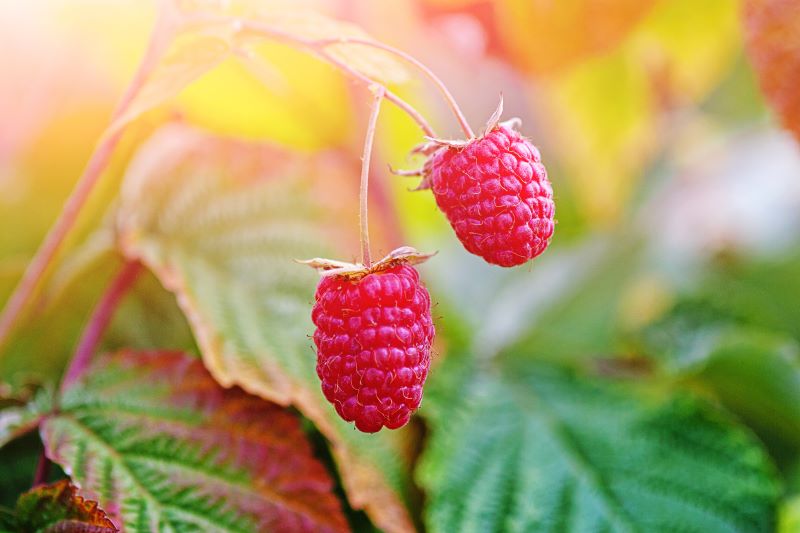
Raspberry leaf has long been pigeon holedas a women’s uterine tonic and while it does make childbirtheasier it is also known for its ability to address inflammation in the mouth and throat, for allergies andinfluenza with copious free discharge of clear mucous and for diarrhoea. Raspberry leaftones the mucousmembranes throughout the body and soothes the kidneys and urinary tract.

Raspberry’s astringent and stimulating properties help to strengthen and tone the uterine and pelvicmuscles, while the relaxing and soothing properties relax theuterus at the same time. This acts to reducethe pain of uterine contractions during childbirth and also make the contractions more effective andproductive, thereby easing and shortening the duration of the birth and reducing the risk ofhaemorrhage. Itcan also aid with production and maintenance of breastmilk, as an adjunctive treatmentfor menorrhagia, and as a general and uterine tonic following surgery to the uterus, for example, theremoval of fibroids, termination of pregnancy or a curette.

In our latest naturopathic guide on uterine fibroids, raspberry extract is one of the herbs listed forconsideration to include in treatment plans.Raspberry leaf can be beneficial for uterine fibroids as it canhelp soothe the pelvic pain anddecrease the heaviness of the periods associated withfibroids

References

de la Forêt R. Raspberry monograph. [Internet] Herb Mentor:Learning Herbs c2020[accessed Jul 15 2020.] Available fromhttps://herbmentor.learningherbs.com/herb/raspberry/

Hechtman L. Advanced Clinical Naturopathic Medicine. Elsevier Australia:Chatswood.2020. p. 439

HEC The Naturopath's Guide to Uterine Fibroids
News Image
News Category
News Summary
Unveil how Raspberry leaf not only supports childbirth by easing uterine contractions but also helps alleviate inflammation in the mouth, throat, and urinary tract, while benefiting uterine fibroids and menstrual health.

Add new comment

Sarsaparilla

Submitted by admin on Mon, 07/22/2024 - 15:36

To many Australians sarsaparilla is a uniquely flavoured, old-fashioned soft drink which is sold under the brand name SARS. That is SARS as in "sarsaparilla" not SARS the lethal virus, bringing into question the old adage that ‘any publicity is good publicity’. Strangely enough, sales of this soft drink actually increased during the SARS epidemic, with a BBC news website reporting that some people were asking, “Is this a medicine for SARS or protection against SARS?”. 


However, despite this PR nightmare, the Smilax species have a long history in folk medicine for the treatment of inflammation. A build-up of toxins in the body is linked to inflammation and this species promotes the elimination of toxic waste. The native people of the Amazon area know sarsaparilla as a blood cleanser (alterative) and have traditionally used it to re-establish virility in men, to treat the symptoms of menopause in women, for urinary complaints and as a cough remedy. The late Dorothy Hall said for teenage acne sarsaparilla is often prescribed with liver regulators like dandelion (Taraxacum officinale) and fenugreek (Trigonella foenum-graecum)…”If you still ‘break out’ on the face before a period, or suffer spotty eruptions around the neck and the hairline past the twenties, sarsaparilla may be needed to help your hormones ‘decide’ on their levels of production." 


Sarsaparilla’s most enduring recommendations have been for rheumatism and psoriasis. It is particularly useful when there is a lot of irritation. Sarsaparilla was extensively studied as a treatment for psoriasis in the early 20th century prior to the development of many of the steroidal type drugs in common use today. The studies were not nearly as rigorously constructed as modern trials but they show some compelling evidence nevertheless. This is especially persuasive given how difficult it is to successfully treat psoriasis. Two to three months of treatment were commonly required but more than 50% of the people suffering from psoriasis improved when given large daily doses of sarsaparilla extracts. The patients who received the most benefit had chronic plaque psoriasis.

References

Eslick GD. SARS in a can! The Medical Journal of Australia. 6 Dec 2004 https://doi.org/10.5694/j.1326-5377.2004.tb06477.x

Tian L-W, Zhang Z, Long H-L, Zhang Y-J. Steroidal Saponins from the Genus Smilax and Their Biological Activities. Natural Products and Bioprospecting. 2017;7(4):283-298. doi:10.1007/s13659-017-0139-5.

Hall D. Dorothy Hall’s Herbal Medicine. Sydney:Lothian. 1988. p. 273.

Thurmon FM. The Treatment of Psoriasis with a Sarsaparilla Compound. July 23, 1942. N Engl J Med 1942; 227:128-133

News Image
News Category
News Summary
Uncover how Sarsaparilla, a traditional remedy for inflammation and detoxification, can be used to address acne, rheumatism, and psoriasis, with promising results in chronic conditions.

Add new comment