
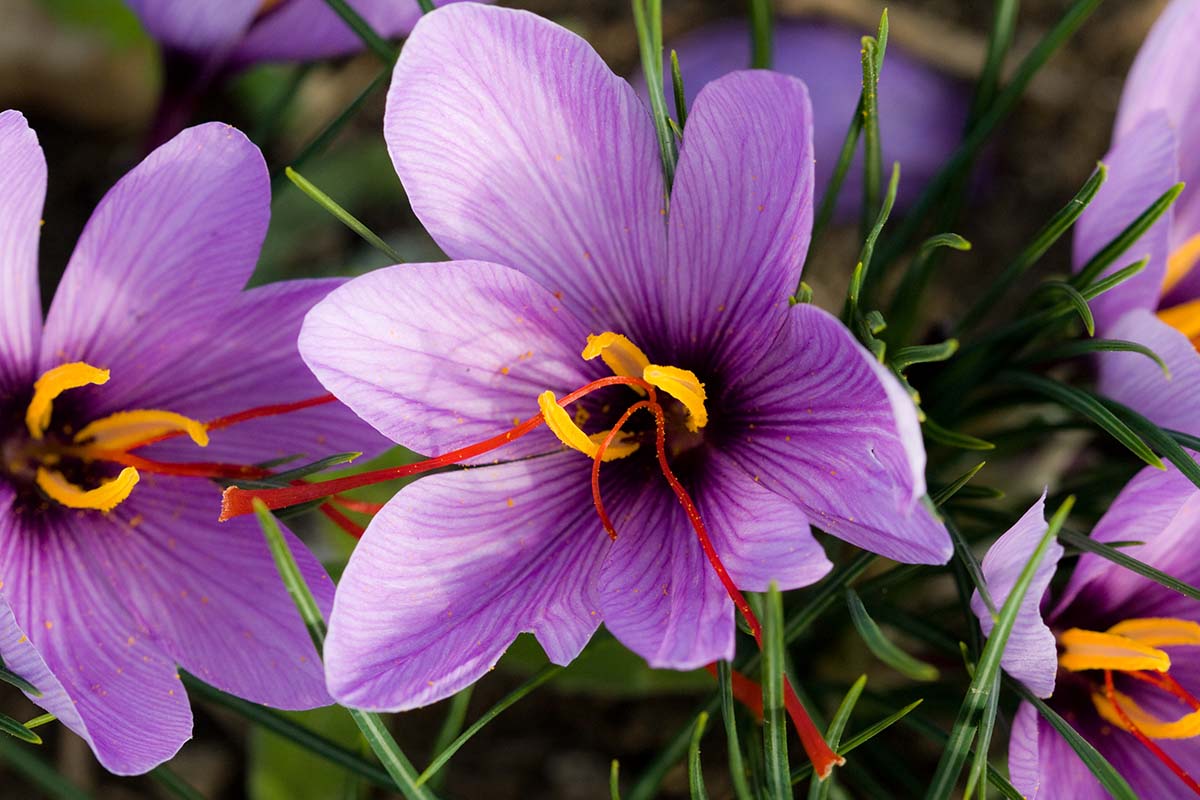
The vivid crimson stigmas and styles produced by the delicate mauve flowers of the saffron plant have the distinction of being the most expensive food on the planet. The reason is the laborious and labour-intensive method needed to harvest them. Throughout history saffron has been valued for not only infusing dishes in which it is used with a golden glow but also for its medicinal properties.
A growing body of research suggests that saffron may reduce some of the symptoms, and help improve focus, in people with Attention Deficit Hyperactivity Disorder (ADHD). In 2019, a landmark pilot study brought saffron versus methylphenidate (Ritalin) to the attention of the ADHD community. Researchers found that 20 to 30mg of saffron a day for a period of six weeks was comparable to treatment with methylphenidate for symptoms of both inattention and hyperactivity.
Since that time, more research has emerged supporting the benefits of saffron for ADHD. A 2022 study found saffron was more effective than methylphenidate for reducing ADHD symptoms of hyperactivity, though methylphenidate was more effective for inattention symptoms. Both therapies improved the number of hours slept among participants, which is a common challenge in ADHD, but only saffron helped with falling asleep. When saffron and methylphenidate were used together in a 2021 clinical trial, the combination was found to be more effective than the use of methylphenidate alone. These findings were supported by a 2022 clinical trial, which also found that saffron and methylphenidate were a superior combination. Despite these promising findings, more large-scale research on saffron for ADHD is needed
References
Newton J. The Roots of Civilisation. Murdoch Books:London. 2009. p.152
Baziar S, Aqamolaei A, Khadem E, Mortazavi SH, Naderi S, Sahebolzamani E, Mortezaei A, Jalilevand S, Mohammadi MR, Shahmirzadi M, Akhondzadeh S. Crocus sativus L. Versus Methylphenidate in Treatment of Children with Attention-Deficit/Hyperactivity Disorder: A Randomized, Double-Blind Pilot Study. J Child Adolesc Psychopharmacol. 2019 Apr;29(3):205-212. doi: 10.1089/cap.2018.0146. Epub 2019 Feb 11. PMID: 30741567.
Blasco-Fontecilla H, Moyano-Ramírez E, Méndez-González O, Rodrigo-Yanguas M, Martin-Moratinos M, Bella-Fernández M. Effectivity of Saffron Extract (Saffr'Activ) on Treatment for Children and Adolescents with Attention Deficit/Hyperactivity Disorder (ADHD): A Clinical Effectivity Study. Nutrients. 2022 Sep 28;14(19):4046. doi: 10.3390/nu14194046. PMID: 36235697; PMCID: PMC9573091.
Khaksarian M, Ahangari N, Masjedi-Arani A, Mirr I, Jafari H, et al. A Comparison of Methylphenidate (MPH) and Combined Methylphenidate with Crocus sativus (Saffron) in the Treatment of Children and Adolescents with ADHD: A Randomized, Double-Blind, Parallel-Group, Clinical Trial. Iran J Psychiatry Behav Sci. 2021;15(3):e108390. https://doi.org/10.5812/ijpbs.108390.
Pazoki B, Zandi N, Assaf Z, Moghaddam HS, Zeinoddini A, Mohammadi MR, Akhondzadeh S Advances in integrative medicine, 2022, 9(1), 37‐43 | added to CENTRAL: 28 February 2022 | 2022 Issue 02 https://doi.org/10.1016/j.aimed.2022.01.002
Add new comment